
La Rocca, The Godfather, and “The Etna!” {#4 in the series}
Dear Reader, This is #4 in our series of travelogues all around Italy, the UK, and Ireland from October 2024 through June 2025. This one is our final for Sicily — our Eastern Sicily Pilgrimage. Enjoy! Other posts in this series: Venice Pilgrimage, Southern Italy Pilgrimage, and Palermo Pilgrimage and Sicily Family Heritage.
Cefalù: More Mosaics and La Rocca’s Historic Heights
With homemade cookies in tow from the now-familiar Cosi Dusi bakery we were headed for charming Cefalù (cheh-fuh-LOO)! Once there, the medieval streets led us to the 900-year-old Norman cathedral to see the marvelous mosaics and complete this trio of tile artistry that includes the Palatine Chapel (Palermo) and the Duomo (Monreale). We enjoyed a lunch of €2 (!) paninis from Sapori di Sicilia on a seaside bench. On the main pedestrian way, we stopped to see the Lavatorio or washhouse where water from the River Cefalù still comes into the stone basins, and it was easy to imagine women gathered around scrubbing clothes and sharing news. Another unusual sight was the “cat colony” signs that led to a little public “cat house.” (That night the resident cat at our apartment courtyard enjoyed the chicken dinner we shared with her.)


The next day was fantastic — hiking steep and rocky La Rocca (equivalent to 90 flights of stairs!), observing tricked-out climbers ascending and descending the granite mountain face, and exploring the extensive ruins of a castle, a church, a Temple of Diana, and a cistern! The temple and cistern date from the 10th and 5th centuries BC, respectively! The view all along the way and the payoff vista from the top of the former Saracen stronghold walls out over the Tyrehhenian Sea made for an unforgettable time. Afterwards, munching molten-hot made-to-order ragù arancini and splitting a beer from Sfrigola capped off the special day.


A walk the following morning along the not-so-pristine beach (we Floridians are spoiled) near our cottage had John carrying Laura on his back over a rough spot (as she was unshod), which caused more than a bit of laughter. Gibilmanna Sanctuary and Tindari Shrine were the destinations for the day. The first place, whose name means ‘mountain of faith’ in Arabic, had breathtaking Baroque beauty inside and out. It is dedicated to St. Michael. All of this overlooking a valley in the Madonie Mountains with no one around except cats. (Laura appreciated the solitude and crisp air as the old nemesis named carsickness took its toll on the long wind-y way up.) The second sanctuary had fabulous mosaics, the Black Madonna, and a “chiesa antico” in the rear courtyard. Tindari is a former Greek center founded in 396 BC. As for Our Lady of Tindari, in the 9th century, fishermen discovered a crate in the Gulf of Patti with a wooden statue of the Madonna with the Child Jesus in it. They promptly set up the black figure in an abandoned temple of Ceres. Two centuries later Benedictines built a sanctuary there which was destroyed and then expanded over the ages.

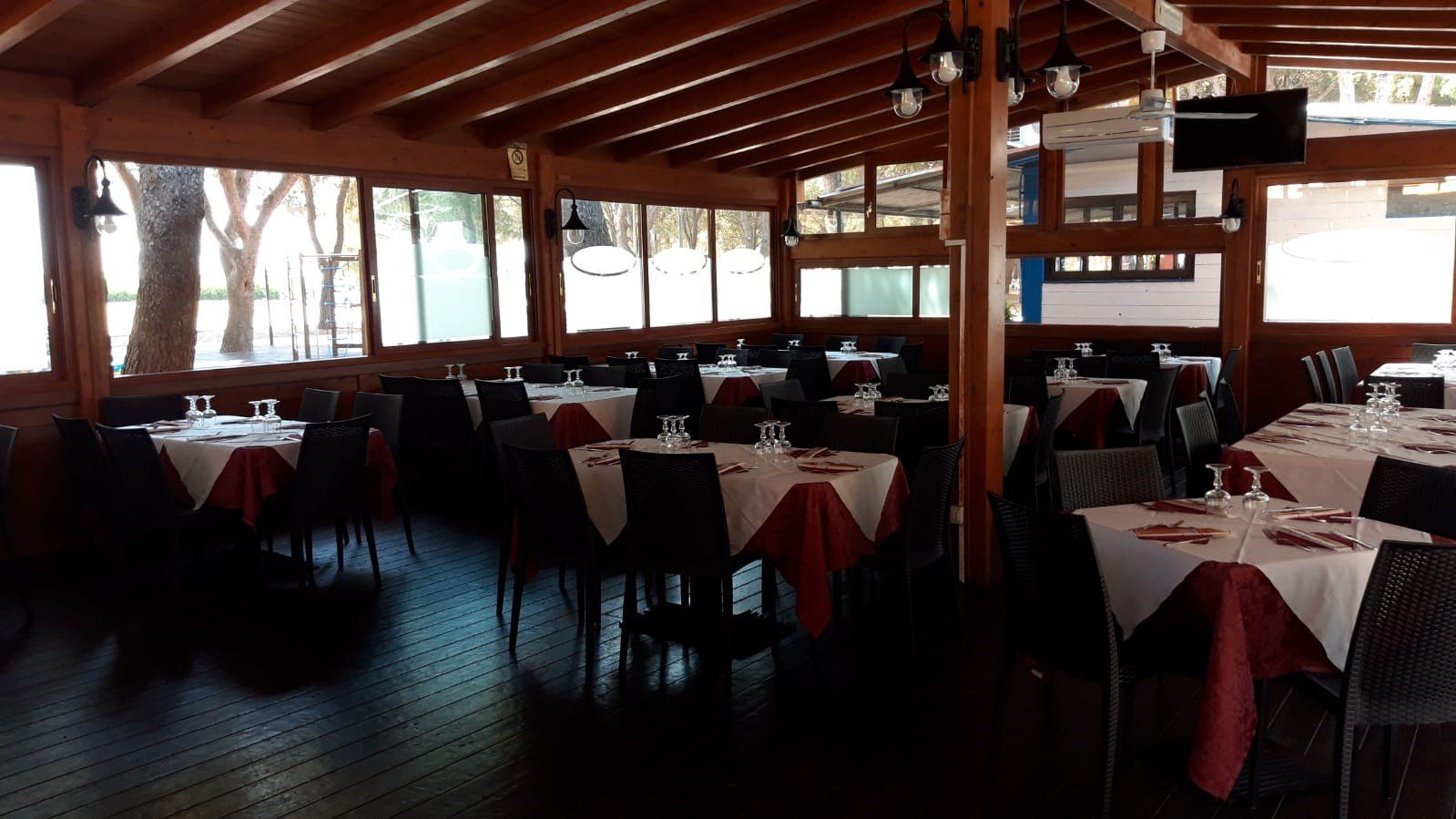
Dinner that evening was a family affair at Number One in the town of Gioiosa Marea with Francesca managing, her mom dolci-creating and her dad pizza-making. We ate our “pies” in a lovely cozy enclosed outdoor area in a wooded park across the street from the restaurant itself. (And took home a delectable semi-fredo desert, glass dish and all!)
Savoca: Scenes from The Godfather
Now it was on to photogenic Savoca, the site of two of “The Godfather” film scenes. Nostalgia! Getting to this remote locale on the twisty-curvy road was part of the adventure. We walked up to Bar Vitelli and the “Godfather” (St. Nicolas) wedding church, enjoyed drink on the “wedding reception” terrace overlooking the valley (and fed the resident cats our cheese puffs). A couple of full tour buses, even in winter (!), surprised us.


Taormina: Elegance and Holiness
Next was the pretty and touristy Taormina, the “Pearl of the Ionian Sea.” Strolling through the elegant village, we admired the influence of Greeks, Romans, Byzantines, Arabs, and Normans who had been here over the last 24 centuries. Amongst the fancy shops, whimsical wooden Pinocchio toys dominate store windows as does splendid Sicilian pottery.

Lunch was out on the terrace at Restaurant Malvasia. By the way, in Italy and Sicily, you don’t say al fresco if you prefer to eat outside. In Italian, al fresco means both “to keep something cold or fresh” and “in prison” (apparently Italian prisons were known to be cold)! We learned to say, Vorrei mangiare fuori to be seated outdoors.

Then we visited the churches of Santa Caterina d’Alessandria (about 500 years old made of Taormina marble) found on Corso Umberto, San Giuseppe (over 300 years old also made with local marble) overlooking the main piazza and the Duomo di Taormina (800 years old made with stones, like a fortress) holding a precious Byzantine Madonna and dedicated to St. Nicholas of Bari.


Catania: The City of St. Agatha
Our Catania home for the week, La Dimora San Giorgio (Abode of St. George), was on a lively corner in a suburb. Perched on the second floor, our tiny balcony permitted a view of smoking Mt. Etna in the distance (and offered a practical place to dry our clothes)! Our gracious host Massimo runs the busy flower shop below.
Thanksgiving Day brought us into Catania city to see the Duomo di Sant’Agata (St. Agatha Cathedral) where her relics are and where composer Bellini is entombed. Next door is the Baroque masterpiece of the Chiesa di Badia di Sant’Agata (St. Agata Abbey Church). It is built like the Pantheon and takes up an entire block. An outdoor lunch at Tantikkia restaurant of fish and shellfish galore was unlike the usual holiday fare but satisfying all the same. And it was a nice break from the colorful Catania market. We had fun wishing American cruise ship visitors a Happy Thanksgiving.


Afterwards, we hit a mall bookstore to purchase an Italian cookbook and a children’s book called “1,000 Words in Italian” (to learn the lingua!). At a Conrad grocery store we picked up some turkey wings for John to bake – it was still Thanksgiving after all!
Mount Etna: Self-Guided Tour and Tasting
And then Mount Etna Day was here! Laura was a bit stressed about the (very high) gondola ride up the mountain but had steeled herself (and taken Dramamine). We parked at 2,500 km (8,200 in feet) and went to the gathering point. We were bundled up to the max as the temperature was well below freezing with high winds at that elevation. Laura bought warm gloves at an outfitters there (critical!), and John was thanking his mom for her pre-trip gift of a hat, scarf and gloves set. Back to getting ourselves “up there” on “The Etna” as Italians call it — would you believe that the gondola was undergoing regular safety testing and was not operating that day! Whew! (Fun (?) fact — the gondola must be regularly reconstructed when violent eruptions ravage it, as it was most recently after the one in 2002.) So, we rode a small bus for 20 minutes up to 2,900 km (9,500 in feet) with perilous switchbacks crisscrossing the alien landscape. You cannot go any higher without a guide.

When we disembarked it was just us and 15 other souls exploring and taking in panoramas of the clouds below (!) and the glowing red lava above. How strange it was to go from the almost alpine ski lodge ambience to the desolate upper slopes on one of the most active volcanoes in the world! Yet, you can touch the lava stones beneath your feet as they are neither hot nor cold. Crunching around on the volcanic charred bits felt more like a spacewalk than a terrestrial one. After a time, we had had enough and queued up for the bus down to the parking level. We had a pizza lunch and beer at Monte Gebel in the lower Etna complex.
Driving down the other side of the mountain to Zafferana Etnea (zafferana means saffron) village took us through Etna Regional Park. (Passing a tree laden with persimmons in November was delightful.) We visited Oro d’Etna for a laidback self-guided tasting of their wine, olive oil, honey, and honey creams. They have 800 bee hives at eight locations to make the many honey flavors. We took home a strawberry honey cream. (Excellent in yogurt.)

The next morning, we popped out of bed early enough to nab a photo of donkey pulling a buggy that we had heard clop-clopping each morning here at about 5:30 am! Got you, Mister – right there on the city street! When the sun came up, we again looked out the kitchen balcony to see “The Etna” covered in white! How fortunate that we had already been there as it would have been considerably colder and more treacherous with the snow!

Advent began with Mass at the Catania Duomo. Lunch after was at the whimsically decorated Trattoria Giglio Rosso (Red Lily), highlighted by a magnificent if semi-gaudy red Murano chandelier. Catholic tchotchkes, paintings, and pottery, all artfully arranged, filled nearly every wall space. We were the first to arrive for this Sunday’s feast, and large local family groups filled in around us, shouting cordially and waving their arms stereotypically as they greeted the owner, the waiters, and each other.
Ragusa and Noto: UNESCO-listed Beauties
Waving goodbye to “Mongibello” (another name for “The Etna”), we made a stop in the picturesque town of Ragusa Ibla with its 4,000-year-old history. The Ibla is the historic section of town at the bottom of a hill; the more modern Superiore part sits at the top. The reason for the division is the 1693 earthquake and subsequent reconstruction. The Italian tv show Inspector Montalbano, a fave of ours, was filmed here (and other locations). After some gelato at Gelati Divini we visited the Duomo St. Giorgio and Chiesa di St. Giuseppe (where they had Eucharistic Adoration). Lunch was at La Terrazza dell’Orologico – a bit tricky to find in the maze of steps and turns. The terrazza is closed out of season but the interior was simple, lovely, and classically Italian with its natural soft-colored stone walls and impossibly high ceiling. Our very formal young waiter made us, his only patrons, feel special. We also walked down to explore the defunct but still imposing Chiesa di Santa Maria dei Miracoli.

Next was Noto, where a crew in a cherry picker graced the piazza to string lights on the 75-foot Christmas tree. Time for a tasty granita (our first!) in classic mandorla (almond flavor) at Cortes. Then we visited churches of St. Carlo Borromeo and Basilica Cattedrale di San Nicolò. We walked the famous Corso Vittorio Emanuele with its palaces and saw two expansive staircases remarkably “wrapped” to make eye-catching images. Apertivo outside at Mamm Arancina (‘Etna Spritz’ special, anyone?) was made cozy under the heater while we watched the beautiful butter-colored Baroque buildings shimmer at sunset.

Siracusa: Ortigia’s Wonders and a Rescue
In Siracusa, we walked onto the island of Ortigia on Corso Umberto over a bridge with Temple of Apollo (!) ruins to our right. Ortigia is the city’s historic section where we saw the mercato, the Jewish Quarter, and Archimedes Piazza. We visited the Duomo which was once a Greek temple of Athena. There, in the Santa Lucia alla Badia chapel, we saw something sweet. A tiny girl of about three loudly proclaimed, “I love you, Jesus” in response to a crucifix on the altar. The bones of St. Agatha were in her namesake chapel. In Chiesa di Santa Lucia there is a “found Caravaggio” painting – discovered underneath another Caravaggio. In a word — cool!
At the seafront, we saw the Fonte Aretusa (artesian well) which used to have pure potable water despite its location on the Gulf of Siracusa and where papyrus grows (a rarity in the area).
Shortly afterwards, we heard an other-worldly howling and realized it was a trapped animal. But where was it? Over there — under that fallen motorcycle! It appeared to be a golden retriever by the size of it. With another man, John helped lift the heavy bike that was pinning down the poor dog – only to discover that it was actually preposterously plump pussycat hightailing away!
Continuing the day’s theme of “unusual” was lunch at Caseificio Borderi in the market — massive prosciutto panino for John and broccoli and sausage impanate (Sicilian empanada) for Laura as we watched and listened to fishmongers around us singing, shouting and selling.

Piazza Archimedes e Fontana di Artemide. Source: Creative Commons
Messina: Firefighter Feast, Madonna of the Letter, and Farewell
Our travels took us next to Messina. The first order was a visit the Duomo. To our surprise, we found a Cardinal and priests along with dozens of firefighters and military colorfully populating the piazza. A majestic 60-foot-tall Italian flag hanging off a firetruck and Schubert’s “Ave Maria” being broadcast completed the scene. We asked some guys in uniform what was going on, and the friendly vigili del fuoco (firemen) explained that they were celebrating the feast of their patron Saint Barbara and their Mass had just ended. It was a perfect place to eat the sandwiches we had brought with us as we admired the church exterior, its bell tower with astronomical clock and the nearby fountain. The Duomo has been destroyed and rebuilt many times since its consecration in 1197; the latest reconstruction was after the earthquake of 1908. The interior is stunning from the tile floor design to the graceful columns, the arresting altar and artwork, and finally the intricately painted beam ceiling.

Before leaving our beloved Italian island, we walked to the seafront to see Stele della Madonna della Lettera or Madonna of the Letter statue that overlooks the harbor. St. Mary is the patroness of Messina because in 42 AD (St.) Paul the Apostle came to Messina to spread the Gospel. Later, as the story goes, some converts went with him back to Palestine. There they met the Virgin Mary and persuaded her to write a letter to the citizens of Messina. It said, “We bless you and your city.” Today’s golden Virgin statue sits on a column called a stele (total height of both is 220 feet, excluding the massive base) and is a reconstruction. The original was destroyed in the 1908 earthquake. At nearly 23 feet in height, she is something to see, and the letter’s message inscribed around the bottom is welcoming to all. Alas, for us it was time to be leaving. We drove onto our Telepass ferry back to San Giorgio on the mainland. Alla prossima, Sicilia!
